
Business valuation and financial forensics

An independent read on the financials, when the stakes are high.

Attorneys, M&A advisors and CPA firms bring me in when complex financial information has to become a clear, defensible story that holds up in negotiation, an audit, a deposition or a trial.

CPACVAMAFFCFF
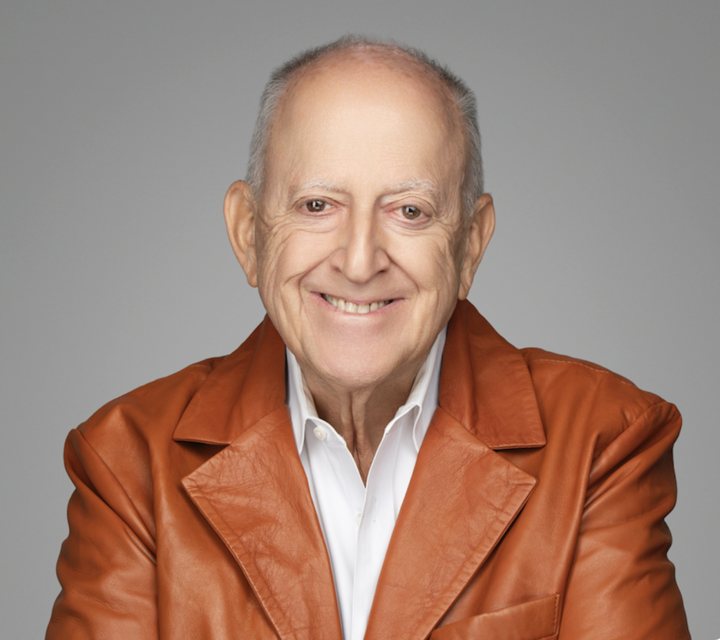
Portrait of Edward Bortnick
Edward A. BortnickIn public accounting since 1971. Expert witness in circuit, bankruptcy and federal courts.

An advisor to advisors

The important questions rarely live in the numbers themselves.

Over five decades in public accounting, including eighteen years running my own practice, I've worked alongside hundreds of business owners through sales, disputes, valuations, succession plans and hard financial decisions.

What I learned is that a number on a report only shows how someone described a business. It doesn't prove what the business is worth or what really happened. So I look at what sits around the number and ask whether the story holds up.

I can be an experienced sounding board, someone who has seen financial stories challenged from every angle and knows where the hard questions tend to surface.

My role isn't to replace you. It's to support you.

Services

Where I can help

Most of my work comes through the professionals who already advise the business owner. I work alongside you, on your file, under your direction.

Business valuation

Independent valuations for estate and gift tax, sales and buyouts, succession plans and disputes, including how much to discount a minority stake or a controlling interest.

Second-opinion reviews

A credentialed review of someone else's valuation before a return is filed, a deal is signed or a report goes to the other side. I look for the question a real buyer would ask first.

Financial forensics

Suspected embezzlement, manipulated financial statements, owner expenses run through the business and money moved between related parties. I reconstruct what happened from the records.

Litigation support and testimony

Damages and lost profits, shareholder and partner disputes, breach of contract, marital business valuations and bankruptcy matters, from early case review through expert testimony.

Tax and estate matters

Valuation work behind estate tax returns, amended returns and IRS appeals, drawing on a background in taxation that goes back to the start of my career.

Transactions

Support for M&A advisors and their clients on what a business is really earning, what the financial statements prove and where a buyer's diligence is likely to push.

Who I work with

Professionals who serve business owners

Attorneys

Litigation, family law, estate and business attorneys who need a valuation or forensic analysis that will survive cross-examination.

M&A advisors

Advisors who want an independent read on value and quality of earnings before a client goes to market or sits down to negotiate.

CPA firms

Firms that need valuation, forensic or testifying support for a client without building that practice in-house.

Wealth managers and estate planners

Advisors whose clients' largest asset is a private business, and who want the number behind the plan checked.

From the files

Between two estate tax returns, I recovered close to $4.3 million for clients.

Neither one involved a math error. In both cases, the valuation failed the simplest test I know: would anyone actually pay this?

The first was a widow whose husband had owned two private companies. One had been valued at about $18 million, even though almost 100% of its revenue came from a single customer. If that customer walked, most of the business would walk with it. A stake in a private company like that is also hard to sell, and that lowers the price further. The report hadn't discounted for either one.

We redid the valuations, filed an amended return and went through the IRS appeals process. The estate got back almost $2.7 million, including interest.

The second file was a lawsuit. The estate owned a claim in a case that hadn't gone to trial yet. It hadn't even started. A retired judge had valued it at a little over $5 million.

I read the case and looked at the facts. Then I asked who would pay millions today for a lawsuit that might never succeed. Truthfully, I couldn't think of anyone. So I valued it at zero. We filed an amended estate tax return with the new valuation, and the client got back just over $1.6 million.

To be fair, both original valuations looked complete on paper. The formulas worked. What they skipped was the question a real buyer would ask first. That's why I tell attorneys and business owners to have a second credentialed valuation professional review the numbers before the return is filed.

A number can be calculated perfectly and still be worth nothing.

What the return said, and what held up
AssetWhat the valuation missedRecovered
Private companyValued at about $18 million Nearly all revenue from one customer. No discount for that risk, or for how hard the stake would be to sell. ~$2.7Mincl. interest
Claim in an untried lawsuitValued at a little over $5 million No trial, no buyer and no certain outcome. Revalued at zero. $1.6M+
Total recovered for the two estates~$4.3M

About

Edward A. Bortnick, CPA, CVA, MAFF, CFF

I began my career in public accounting in 1971 and have been a principal since 1977, including eighteen years in my own practice before merging with Simon Krowitz Bolin & Associates, P.A. in 1998.

Over the years my work has covered accounting, taxation, business matters and valuation, with a growing focus on litigation: valuations, bankruptcy and divorce support, and business disputes. I've appeared as an expert in circuit, U.S. bankruptcy and federal courts.

I'm a past president of the Maryland/DC Chapter of the National Association of Certified Valuators and Analysts and have served on the association's Credentialing Board.

Through The Advisors Edge, I now work as an advisor to advisors, bringing that experience to the attorneys, M&A advisors, CPA firms and wealth managers who serve business owners.

Credentials

  • Certified Public Accountant (Maryland)
  • Certified Valuation Analyst (NACVA)
  • Master Analyst in Financial Forensics, specializing in Fraud Risk Management
  • Certified in Financial Forensics
  • B.S. in Accounting, University of Maryland

Recognition

  • NACVA Outstanding Member Award
  • NACVA State Chapter Leadership Award, 2011

Affiliations

  • American Institute of Certified Public Accountants
  • National Association of Certified Valuators and Analysts
  • Maryland Association of CPAs
  • American Academy of Attorney-CPAs (Associate Member)
  • Alliance of Merger & Acquisition Advisors
  • Montgomery County Maryland Estate Planning Council
  • McLean Estate Planning Council

Courtroom experience

Testimony and litigation support

Several times a year I'm called as an expert witness. What holds up under cross-examination is being able to explain where a number came from, why I trusted it, and what I'd say to someone determined to knock it down.

Courts

  • Maryland circuit courts: Montgomery, Baltimore, Howard, Prince George's, Anne Arundel and Charles counties
  • U.S. District Court, Greenbelt, Maryland
  • Federal court, Miami, Florida
  • U.S. Bankruptcy Court, Los Angeles, California
  • D.C. Superior Court
  • Court of Common Pleas, York County, Pennsylvania
  • Circuit court, Ann Arbor, Michigan

Types of matters

Business disputesPartner and stockholder disputesLost profitsBreach of contractAlleged embezzlementDivorce and marital valuationTax mattersBankruptcy supportWrongful terminationPersonal injury

Matters have resolved at trial, in settlement and in arbitration. A full list of prior testimony is available to retaining counsel on request.

Industries

Businesses I've valued

Valuation work across more than fifty kinds of businesses, from medical practices to utilities.

Medical and health care

Primary care, internal medicine, gynecology, ophthalmology, radiology and hematology-oncology practices, MRI centers, home health care

Construction and real estate

Land and real estate developers, residential contractors, commercial real estate, shopping center partnerships, residential rentals, asphalt, iron work and cabinet contractors

Manufacturing and industrial

Drug and dry goods manufacturers, optical lens and eyeglass makers, steel fabricators, metal form and tube companies, education materials, heavy equipment sales

Energy, utilities and environmental

Utility companies, fuel dealers, nuclear power plant consultants, petroleum recovery and remediation, waste disposal

Retail, food and hospitality

Automobile dealerships, collision centers, grocery and specialty food stores, restaurants, craft breweries, wine and spirit stores, seafood wholesalers, golf courses

Professional and financial services

Government contractors, management and computer consultants, commercial insurance agencies, insurance underwriters, interior designers, fundraising firms, private schools, biotech and pharmaceutical research, trucking, radio licensing

Insights

How I think about the work

Article

Complexity Is Not Credibility

A forensic financial expert on what actually persuades a jury.

Read the article

By the time I take the stand, the analysis is done. The models have been checked and the opinions tested against every challenge I expect on cross. But the part of my preparation I consider most important happens after all that: figuring out exactly where a jury is likely to get lost and making sure they never do.

I know the words that cause trouble. "Normalized earnings." "Discount rate." "Present value." To me, they're everyday vocabulary. To a juror hearing them for the first time, they're the moment attention drifts. So I plan for those moments the same way I plan for cross-examination.

There's a common belief that financial cases are simply too complex for lay jurors. I've never found that to be true. Jurors can follow a sophisticated financial analysis. But it's my job to bring them along.

Jurors can handle more than we give them credit for.

The research backs this up. Studies of real and simulated fraud trials, including a recreation of the UK's Maxwell case and interviews with jurors from London's Jubilee Line trial, found ordinary jurors could understand complex financial evidence when it was presented with care. A large US field study found evidence complexity didn't predict whether judges and juries disagreed on verdicts.

Jurors want to understand. They take the job seriously. What they don't have is years of reading financial statements so it's my job to close that gap.

Why I treat clarity as part of the work.

When the testimony is clear, my credentials barely matter; jurors weigh the substance. Research has found that experts who were highly paid were dismissed as "hired guns," especially when they were hard to follow.

Think about what that means for anyone in the witness chair. If the testimony is confusing, the jury stops evaluating the analysis and starts evaluating the expert: the fee, the résumé, how often they testify, whether they seem likable.

All the work behind the numbers becomes irrelevant. Clarity isn't a presentation skill. It's how I make sure the work gets judged on its merits.

I tell a story before I show a number.

Jurors think in narratives. Research on damages suggests they first form a gut sense of how serious the harm was, then translate that into dollars. So before I walk through a single calculation, I explain what happened to the business in plain terms: what it was earning, what changed and what it would look like today if that hadn't happened.

Then I show my work. Studies of real deliberations show jurors push back on figures that aren't grounded in evidence. A transparent calculation tied to actual records is the most persuasive thing I can offer.

What I do on the stand.

I talk like I'm explaining it at the kitchen table. No acronyms. If I'd need to explain a term to my neighbor, I explain it to the jury.

I define every term, every time. I've heard of an expert who gave a twenty-minute valuation explanation, only for the judge to ask what a cap rate was. That's the moment I plan to prevent.

I simplify without distorting. An analogy that oversimplifies will get taken apart on cross, and my credibility goes with it.

I follow the four S's: say it, support it, summarize it, and stop talking.

I get off the stand when I can. Walking the jury through a chart, with the court's permission, changes the energy in the room.

I ask to be tested. If counsel runs a mock jury, I want to hear what those jurors understood, and what they didn't.

My charts matter and so do the rules around them.

I rarely testify about a complex transaction without a visual, and I work closely with counsel on how each exhibit is offered.

Since December 2024, federal Rule 107 treats illustrative aids as non-evidence that generally stays out of the jury room, while amended Rule 1006 lets properly supported summaries of voluminous records come in as evidence. If a chart needs to be in deliberations, we build it for that from the start.

What I hope the court allows.

When jurors can take notes and submit written questions, I see the difference. Their questions show me exactly where they want more and I get to answer it. Research supports both practices in complex trials.

What I tell newer experts.

Your credentials get you on the stand. Your clarity is what keeps the jury listening. If the jury understands your analysis, they'll judge it on the merits. If they don't, they'll judge you instead.

Note

A number isn't evidence simply because it appears in a financial statement.

What opposing counsel went looking for in my damages calculation, and why I already had the answer.

Read the note

Several times a year I am called as an expert witness. The last time I gave testimony I remember watching opposing counsel flip through my report to my damages calculation. I remember thinking to myself that he was clearly looking for something specific.

And I was right, he didn't challenge my conclusion. Instead he went straight for the assumption holding it up. He wanted to know what growth rate I'd used to project future revenue.

"Where did this number come from?" he asked.

Fortunately I had my answer ready because I'd built that assumption earlier and had walked away from the more aggressive number that management had wanted me to use.

But sitting there, I remember thinking, if I hadn't already fought with myself over that number weeks before, I'd be fighting with him for the first time, live, in front of a judge.

Anyone can point to a spreadsheet. What holds up under cross-examination is being able to explain where a number came from, why you trusted it, and what you'd say to someone determined to knock it down.

The best experts I know don't wait to get caught. They've already sat on the other side of the table, at least in their own head, and asked themselves: what would I challenge if I were sitting across from me?

That's the question that made me re-check my growth rate weeks before I ever took the stand. So when opposing counsel asked me his question, I wasn't scrambling. I already knew the answer.

Note

If you co-own a business and have never looked through the travel account, it's worth an afternoon.

A four-night resort stay, a Tuesday lunch and the difference between a label and what happened.

Read the note

I had a file a while back where the owner of a small distribution company expensed a four-night stay at a resort in Scottsdale. The books said "client meetings."

The receipt was there and it matched the amount on the credit card. The bookkeeper had coded it to travel. On paper there was nothing to see.

Then I pulled his calendar. The client meeting was a Tuesday lunch. His wife and kids flew in Wednesday morning.

So how much of that $3,800 bill belonged to the company? In my report, one night plus the lunch. The other three nights went in the personal column.

A large portion of my job is checking whether the label on a transaction is true. An account code only tells me how somebody decided to classify a payment. It doesn't prove anything. So I look at what sits around the receipt, like the calendar entries or the names on a dinner bill to see if the story holds up.

I'm also slow to call anything fraud. A lot of the time a personal charge on a company card is just sloppy bookkeeping. The owner meant to pay it back and forgot or someone booked it as an expense when it should have been an owner draw. How the charge was approved and what happened to it afterward usually tells me which one I'm looking at.

Where it gets serious is the pattern. In that Scottsdale case, the "client meetings" added up to about $41,000 over three years. That's expenses overstated and profit understated and in a dispute between partners it's money the other side can argue was really a disguised distribution to one owner.

Most of the partners I've worked with wish they'd looked sooner.

Published articles

  • "Just Don't Paint by the Numbers When Valuing a Controlling Interest," NACVA QuickRead, February 2021
  • "Do Not Be Too Quick to Discount a Discount for Controlling Interests," Valuation Strategies, July/August 2014

Contact

Let's talk about your file.

Whether you're working through a business sale, a shareholder dispute, a valuation question, a succession matter or litigation, I'd welcome a 20-minute call. Tell me a little about the situation and we'll see whether a second set of eyes would help.

If you'd like a second set of eyes on a valuation before it's filed, email is the easiest way to reach me.

Office
Advisors Edge LLC
909 Rose Avenue, Suite 400, Unit 24
North Bethesda, MD 20852

Email to schedule a call

© 2026 Advisors Edge LLC. Edward A. Bortnick, CPA, CVA, MAFF, CFF. North Bethesda, Maryland